About Us

Inaphaea BioLabs is a new Nottingham pharmaceutical services company, based in MediCity (UK), offering cell-based assays specialising in oncology and women’s health.

Our aim is to improve the translation of early drug discovery projects towards the clinic. Driven by a desire to generate deeper biological understanding of drug candidates in discovery and preclinical phases of development, Inaphaea will provide testing services that generate the necessary data, analysis and insights to aid decision making in translational drug development.

Spun out from ValiRx PLC, the core team within Inaphaea have a strong background of preclinical and clinical drug development, and of understanding both the commercial and scientific needs of the service users from both sides of the table.

FAQ

How can Inaphaea help you develop your idea, project, or drug discovery project?

At Inaphaea, we pride ourselves on high-quality science, well-conducted.

We focus on reproducibility, human relevance of models and translatability of science to ensure efficient progress through discovery, preclinical and towards clinical development.

Inaphaea is led by a team that has decades of experience in virtual biotech and a strong understanding of what service users need. We prioritise ease of access to our services and scientists, as well as transparent arrangements and fixed pricing for standard, validated assays in accordance with our Customer Charter.

As more of our assays become validated, the reproducibility and range of services will provide even more evidence of the talents of our team.

Additional technologies to improve early human-relevant models are central to our strategy and these will be fully validated before being offered to our service users.

Speak to us if you have any feedback, requests for new services, or ideas on how we can improve.

Who do I talk to about my project?

Please email us at info@inaphaea.com so that a member of the Inaphaea team can discuss your needs and how our services can help. We can then work together to design the right protocol for your project.

What’s the process for working with you?

Once we have established the team to work on your project, you will be assigned a scientist who will be your main contact in the science team. This scientist will be in charge of your experimental work, either conducting it themselves or closely supervising it.

When the experimental work is complete, or at intermediate milestones, depending on the design of your project, you will be invited to join a meeting to discuss the data and receive a report. Although reports can be provided without a meeting, we find that the science team can impart additional thoughts and insights about your project in conversation.

Reports include interpretation and recommendations for the next steps in your project, as well as all raw data collected.

Any unusual data (whether good or bad!), decision points, or changes in timing or equipment will always be communicated to you as promptly as if the experiment were being conducted in your own laboratory.

How can we get started?

In the first instance, feel free to email us at info@inaphaea.com or use the contact page on our website. Alternatively, our team members attend industry and academic events throughout the year, so we would always be happy to arrange a face-to-face at any of these events. Keep in touch with us via our LinkedIn page.

How do I ensure my project or idea is protected?

During the proposal and experimental design process, you will be invited to continue the conversation under a confidentiality agreement. This can be put in place at any time in the process to allow you to share your scientific information with Inaphaea with complete peace of mind. Your confidential information will only ever be used for your benefit to design your protocols. It will not be used to the benefit of other Inaphaea users or Inaphaea-associated companies.

Inaphaea’s parent company, ValiRx PLC, conducts in-house drug development and uses the Inaphaea labs for in vitro testing.  ValiRx’s in-house projects are in-licensed from university or third-party company innovators as discrete projects and are developed and optimised in-house, but are not de-novo research on ValiRx innovator ideas.

ValiRx scientific personnel can be called upon to assist in the Inaphaea lab during the design, operation or interpretation of projects, and Inaphaea service users can benefit from the experience of ValiRx personnel in preclinical (and clinical) drug development.

If an Inaphaea service user wishes their project to be in-licensed by ValiRx, this should be flagged to our team, who can assist in making the right introductions for the project to be considered for funding, support and in-licensing under normal ValiRx terms and conditions.

What is the relationship between Inaphaea and ValiRx PLC and how could it affect our collaboration?

ValiRx PLC is the parent company of Inaphaea BioLabs Limited, owning 100% of the shares of Inaphaea. However, Inaphaea operates as a subsidiary company, benefitting from the experience and corporate framework provided by ValiRx while maintaining independence.  Inaphaea has an independent email and IT system as well as independent facilities.

ValiRx personnel contribute skills, experience and time to Inaphaea, enabling Inaphaea to run efficiently to the benefit of our service users.

Inaphaea operates with complete autonomy, and each project is treated with the utmost discretion. We provide confidentiality agreements and NDAs whenever required.

What services does Inaphaea offer?

Inaphaea provides translational drug discovery services designed to connect early research with clinically relevant insights. We offer biochemical and target-based assays, advanced in vitro and cell-based testing, patient-derived cell models for translational relevance, high content and multiparametric analysis, and strategic in vivo translation through trusted partners. Our approach supports smart, rapid and ethical drug development, maximising predictive models and regulator-aligned progression.

What therapeutic areas does Inaphaea specialise in?

Inaphaea specialises in oncology and women’s health, applying advanced translational models and patient-derived systems to deliver clinically relevant insights. These are the areas where our expertise, platforms and experience have the greatest impact.

Our team’s depth of scientific knowledge and flexible translational capabilities also allow us to support projects in other therapeutic areas, designing studies tailored to each project’s needs without compromising quality or translational relevance.

How far along do I need to be with my project before Inaphaea can assist me?

Inaphaea works with projects at multiple discovery and preclinical stages, from hit identification through lead characterisation and translational validation. We excel at focused, high-value studies, using advanced in vitro and patient-derived models to generate actionable insights and guide decision-making. Whether you’re validating a new target, exploring a lead compound, or planning translational studies, we can tailor our approach to accelerate your project with confidence.

What is the process of collaborating with you?

Collaborating with Inaphaea begins with a focused scientific discussion to understand your compound, target and development objectives. This allows us to identify where we can add the most value and ensure the work is aligned with your project stage.

We then design a bespoke experimental strategy, selecting the most appropriate biochemical, in vitro and patient-derived models to address your key translational questions. Projects are run in close collaboration with our clients, with regular data review and interpretation, enabling clear, timely insights that inform next steps and keep development moving efficiently.

What equipment does Inaphaea have?

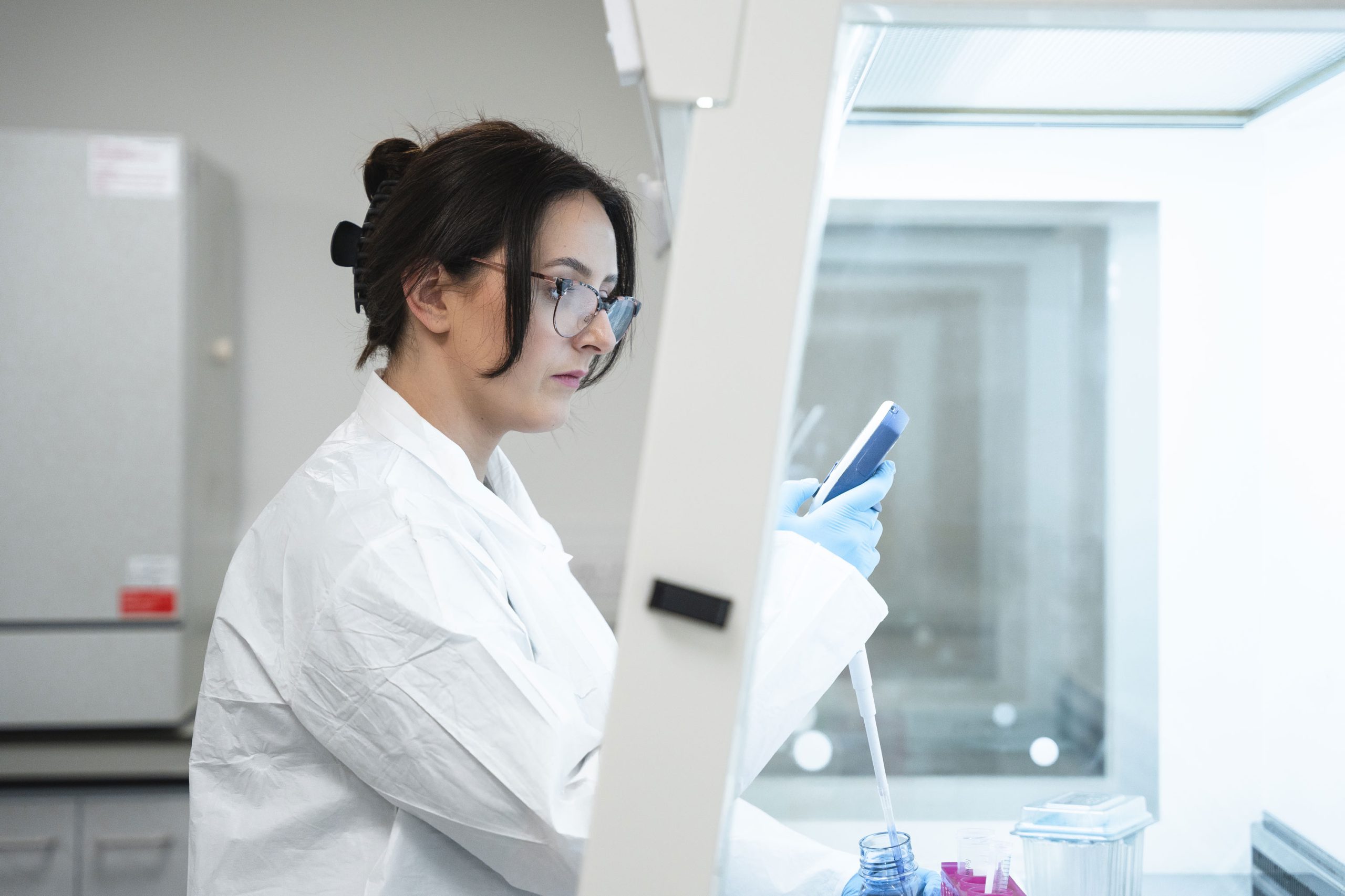
Inaphaea operates a fully integrated tissue culture–based drug discovery facility, designed to support biochemical, in vitro and translational research.

Our laboratories include a comprehensive tissue culture infrastructure to support routine and advanced cell-based experimentation. We are equipped with platforms for kinetic live-cell analysis, image-based cytometry and high content cellular assessment, allowing real-time and endpoint measurement of cell health, proliferation and functional responses.

We support biochemical and reporter assays using multimode plate reading systems, alongside automated compound dispensing, liquid handling and pipetting technologies to ensure consistency, scalability and data quality across studies.

Our capabilities are complemented by access to advanced flow cytometry, including full spectral immunophenotyping, as well as protein analysis methods such as western blotting. Together, these technologies enable robust, multiparametric interrogation of drug response across molecular, cellular and functional levels.

Rather than operating individual instruments in isolation, our facility functions as a cohesive translational platform, enabling bespoke experimental design and the generation of high-quality, reproducible data that supports confident decision-making.

How can you develop my drug?

Inaphaea supports drug development through translational, human-relevant models, with a particular focus on patient-derived cell collections.

We work from focused hit identification and lead characterisation, using biochemical and in vitro approaches to establish the mechanism of action and functional activity. A core part of our offering is access to acquired and expanding patient-derived cell collections, which enable assessment of drug response in models that better reflect clinical heterogeneity and disease biology.

By testing compounds across relevant patient-derived cells alongside well-characterised in vitro systems, we help identify responsive subpopulations, explore variability in drug response and generate data that is more predictive of clinical outcomes. This approach supports informed prioritisation and optimisation of compounds before progression into in vivo studies.

Where required, we work with strategic in vivo partners to support downstream validation, maintaining alignment between patient-derived, in vitro and in vivo data.

Our focus is on generating robust translational evidence that supports confident development decisions, rather than broad screening or technology-driven experimentation.

Do you offer bespoke assay development/testing services for my drug?

Yes. Inaphaea specialises in bespoke assay development and testing, tailored to your specific compound, target and translational questions.

We design assays to be fit for purpose, starting with the biological question rather than a fixed platform. This includes biochemical assays to explore target engagement and mechanism of action, alongside in vitro and cell-based assays to assess functional activity, potency and safety. Where appropriate, assays can be applied across patient-derived cell models to generate clinically relevant insight and capture variability in drug response.

Assays are developed, optimised and run in close collaboration with our clients, with a focus on data quality, reproducibility and clear interpretation. The goal is to generate results that directly inform development decisions, rather than producing data in isolation.

What services can Inaphaea offer big Pharma?

Inaphaea works with large pharmaceutical companies as a specialist translational partner, providing focused expertise that complements internal discovery and preclinical teams.

We support big pharma programmes through bespoke assay development, advanced in vitro and patient-derived cell testing, and multiparametric data generation to address specific translational questions. Our patient-derived cell models are particularly valuable for exploring disease heterogeneity, understanding variability in drug response and strengthening confidence in progression decisions.

Inaphaea is often engaged where rapid, high-quality translational insight is needed, whether to support target validation, refine lead selection or de-risk programmes prior to in vivo studies. We work flexibly alongside internal teams and existing CROs, integrating smoothly into established pipelines rather than replacing them.

What is the average time it takes to develop a drug?

On average, developing a new drug takes 10 to 15 years, from early discovery through to regulatory approval. This timeline includes target identification, preclinical research, clinical trials and regulatory review, with many candidates failing along the way.

A major reason for these long timelines is uncertainty early in development. Generating high-quality, human-relevant data at the discovery and preclinical stages can help teams make better decisions sooner and reduce costly delays later.

Inaphaea focuses on this early phase, using translational and patient-derived models to support more informed progression decisions, helping programmes move forward with greater confidence.

How do you use AI in drug discovery?

Inaphaea uses AI-enabled bioinformatics approaches to support drug due diligence and the de-risking of discovery and preclinical programmes.

We apply computational and bioinformatics tools to profile experimental models, analyse sequencing and molecular data, and integrate results across in vitro and patient-derived systems. This helps build a clearer, evidence-based understanding of disease biology, target relevance and drug response.

We also work with specialist AI partners to support advanced data analysis and interpretation, particularly where large or complex datasets are involved. These approaches are used to strengthen translational confidence, support prioritisation decisions and reduce uncertainty early in development.

AI is applied as part of a scientist-led, question-driven workflow, ensuring that insights are grounded in biology and directly inform drug development decisions.

Do you offer licencing for data?

Yes, Inaphaea can offer data licensing on a case-by-case basis, depending on the nature of the project and the data generated.

Data licensing typically relates to the use of specific datasets generated through our translational models, patient-derived cell studies or bespoke assays, under clearly defined terms. All data use is governed by appropriate agreements to protect confidentiality, intellectual property and ethical considerations.

Licensing arrangements are structured to support activities such as drug due diligence, programme progression or further development, rather than the sale of generic datasets.