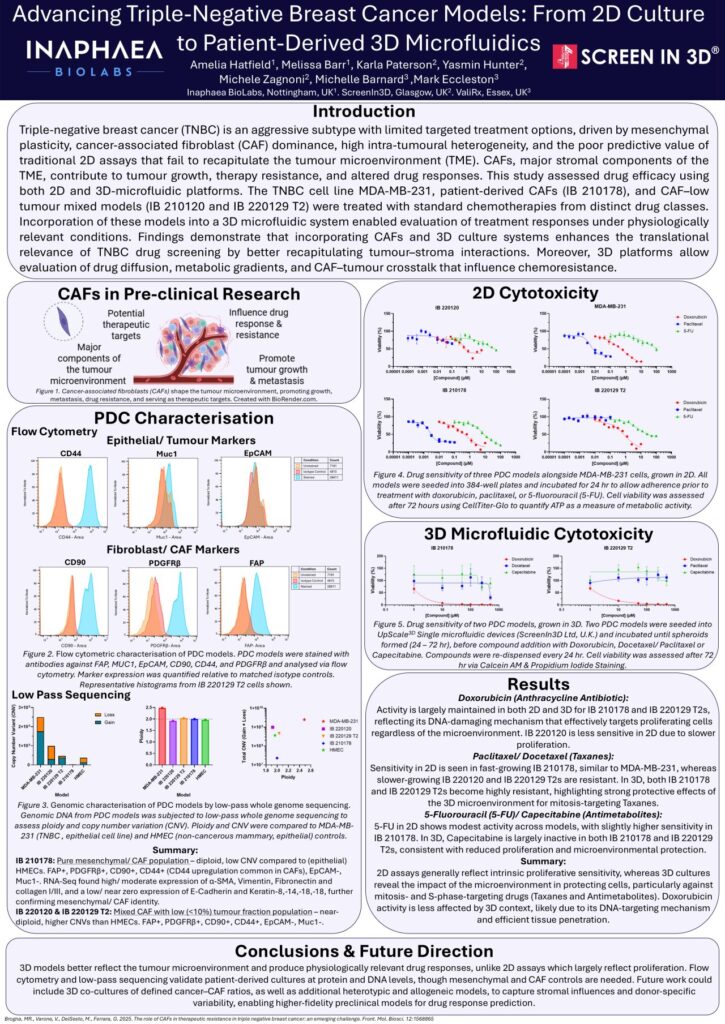
Advancing Triple-Negative Breast Cancer Models: From 2D Culture to Patient-Derived 3d Microfluidics
Triple-negative breast cancer (TNBC) is an aggressive subtype with limited targeted treatment options, driven by mesenchymal plasticity, cancer-associated fibroblast (CAF) dominance, high intra-tumoural heterogeneity, and the poor predictive value of traditional 2D assays that fail to recapitulate the tumour microenvironment (TME). CAFs, major stromal components of the TME, contribute to tumour growth, therapy resistance, and altered drug responses. This study assessed drug efficacy using both 2D and 3D-microfluidic platforms. The TNBC cell line MDA-MB-231, patient-derived CAFs (IB 210178), and CAF-low tumour mixed models (IB 210120 and IB 220129 T2) were treated with standard chemotherapies from distinct drug classes.
Incorporation of these models into a 3D microfluidic system enabled evaluation of treatment responses under physiologically relevant conditions. Findings demonstrate that incorporating CAFs and 3D culture systems enhances the translational relevance of TNBC drug screening by better recapitulating tumour-stroma interactions. Moreover, 3D platforms allow evaluation of drug diffusion, metabolic gradients, and CAF-tumour crosstalk that influence chemoresistance.
Fill in your details to download the poster.
We respect your privacy. Your data is kept safe and used only internally in accordance with our Privacy Policy.